
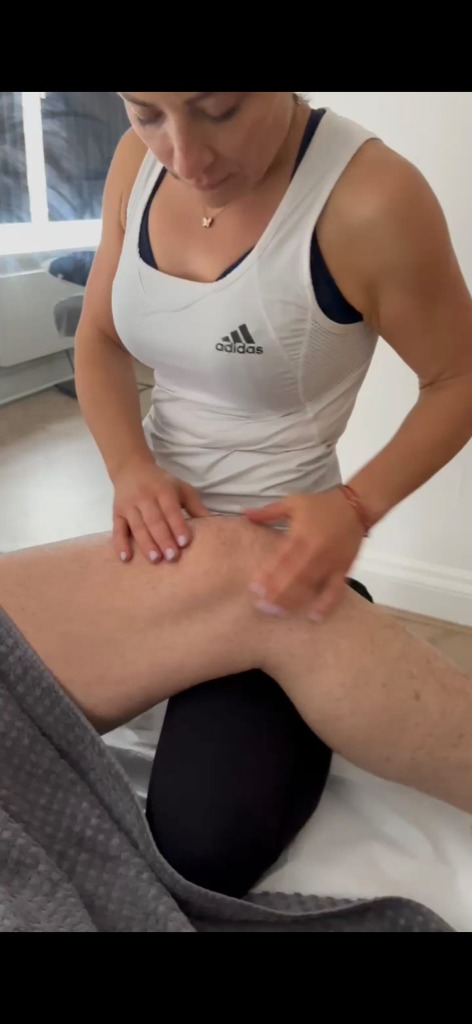
Why Athletes Need More Than Rest
The traditional RICE protocol (Rest, Ice, Compression, Elevation) has been the default recommendation for sports injuries since the 1970s. However, its own creator — Dr. Gabe Mirkin — publicly revised his position in 2014, acknowledging that ice delays healing by suppressing the inflammatory cascade that is essential for tissue repair.
The current evidence supports an active approach: early mobilisation, load management, and hands-on therapies that promote blood flow while managing pain. This is where sports massage becomes not a luxury, but a clinical tool for accelerated recovery.
DOMS: Delayed Onset Muscle Soreness
DOMS affects virtually every athlete — the stiffness and pain that peaks 24–72 hours after intense exercise. It is caused by exercise-induced muscle damage (EIMD): microstructural disruption of the sarcomeres, particularly during eccentric (lengthening) contractions.
The inflammatory response to EIMD involves neutrophil and macrophage infiltration, prostaglandin release, and localised oedema. While necessary for repair, excessive or prolonged inflammation slows recovery and impairs subsequent training performance.
What the Research Shows
A meta-analysis of 22 studies published in Frontiers in Physiology (2017) found that massage therapy applied within 2 hours of exercise:
- Reduced perceived muscle soreness by 30% at 24 hours post-exercise
- Improved objective measures of muscle function (isometric strength, range of motion)
- Reduced creatine kinase (a blood marker of muscle damage) compared to passive recovery
A landmark study by Crane et al. (2012) in Science Translational Medicine — one of the most rigorous investigations ever conducted on massage — took muscle biopsies before and after massage. The findings were extraordinary: massage activated mechanotransduction pathways (specifically the ERK1/2 and FAK signalling cascades) that promoted mitochondrial biogenesis, while simultaneously attenuating NF-?B signalling — the master regulator of inflammation.
Translation: massage doesn't just feel good. It sends molecular signals that accelerate cellular repair and reduce inflammatory damage at a genetic level.
Muscle Strains: Grade I and Grade II
Muscle strains are classified by severity:
- Grade I — microscopic fibre disruption, mild pain, minimal loss of function
- Grade II — partial tear of the muscle, significant pain, reduced strength and range of motion
- Grade III — complete rupture (requires medical/surgical intervention — not treated by massage)
For Grade I and II strains, sports massage plays a critical role in the remodelling phase of healing (typically days 5–21 post-injury). During this phase, the body lays down new collagen to repair the tear — but without mechanical input, this collagen is deposited in a disorganised pattern that creates stiff, weak scar tissue prone to re-injury.
How Sports Massage Optimises Scar Formation
Cross-fibre friction massage, developed by James Cyriax, applies pressure perpendicular to the muscle fibres at the injury site. This mechanical loading aligns the new collagen fibres along the lines of stress, producing scar tissue that is stronger, more elastic, and functionally integrated with the surrounding healthy muscle.
Research in Clinical Biomechanics (2015) demonstrated that tendons treated with cross-fibre techniques had significantly higher tensile strength than those left to heal passively.
Tendinopathy: Beyond Anti-Inflammatories
Conditions like Achilles tendinopathy, tennis elbow (lateral epicondylitis) and patella tendinopathy are now understood to be degenerative rather than inflammatory — which is why anti-inflammatory medications often fail to help.
The pathology involves disorganised collagen, neovascularisation (ingrowth of new, painful blood vessels) and increased ground substance in the tendon matrix. Deep transverse friction massage at the tendon can:
- Break down adhesions between the tendon and its sheath
- Stimulate fibroblast activity for collagen remodelling
- Provide analgesic effects through gate theory — stimulating large-diameter sensory fibres that inhibit pain transmission at the spinal cord
When to Book: Timing Your Recovery
| Condition | When to Start Massage | Recommended Frequency |
|---|---|---|
| DOMS | Within 2 hours of exercise | After each intense session |
| Grade I Strain | 48–72 hours post-injury | 2–3© per week for 2 weeks |
| Grade II Strain | 5–7 days post-injury | 2© per week for 3–4 weeks |
| Tendinopathy | Immediately | Weekly for 6–8 weeks |
"With a BSc in Mobility and Sport Science and over 23 years working with athletes — from football professionals to marathon runners — I've seen first-hand how targeted sports massage transforms recovery timelines. The science isn't just supportive; it's definitive."
— Concetta, Lead Therapist
Why Athletes Need More Than Rest
The traditional RICE protocol (Rest, Ice, Compression, Elevation) has been the default recommendation for sports injuries since the 1970s. However, its own creator — Dr. Gabe Mirkin — publicly revised his position in 2014, acknowledging that ice delays healing by suppressing the inflammatory cascade that is essential for tissue repair.
The current evidence supports an active approach: early mobilisation, load management, and hands-on therapies that promote blood flow while managing pain. This is where sports massage becomes not a luxury, but a clinical tool for accelerated recovery.
DOMS: Delayed Onset Muscle Soreness
DOMS affects virtually every athlete — the stiffness and pain that peaks 24–72 hours after intense exercise. It is caused by exercise-induced muscle damage (EIMD): microstructural disruption of the sarcomeres, particularly during eccentric (lengthening) contractions.
The inflammatory response to EIMD involves neutrophil and macrophage infiltration, prostaglandin release, and localised oedema. While necessary for repair, excessive or prolonged inflammation slows recovery and impairs subsequent training performance.
What the Research Shows
A meta-analysis of 22 studies published in Frontiers in Physiology (2017) found that massage therapy applied within 2 hours of exercise:
- Reduced perceived muscle soreness by 30% at 24 hours post-exercise
- Improved objective measures of muscle function (isometric strength, range of motion)
- Reduced creatine kinase (a blood marker of muscle damage) compared to passive recovery
A landmark study by Crane et al. (2012) in Science Translational Medicine — one of the most rigorous investigations ever conducted on massage — took muscle biopsies before and after massage. The findings were extraordinary: massage activated mechanotransduction pathways (specifically the ERK1/2 and FAK signalling cascades) that promoted mitochondrial biogenesis, while simultaneously attenuating NF-?B signalling — the master regulator of inflammation.
Translation: massage doesn't just feel good. It sends molecular signals that accelerate cellular repair and reduce inflammatory damage at a genetic level.
Muscle Strains: Grade I and Grade II
Muscle strains are classified by severity:
- Grade I — microscopic fibre disruption, mild pain, minimal loss of function
- Grade II — partial tear of the muscle, significant pain, reduced strength and range of motion
- Grade III — complete rupture (requires medical/surgical intervention — not treated by massage)
For Grade I and II strains, sports massage plays a critical role in the remodelling phase of healing (typically days 5–21 post-injury). During this phase, the body lays down new collagen to repair the tear — but without mechanical input, this collagen is deposited in a disorganised pattern that creates stiff, weak scar tissue prone to re-injury.
How Sports Massage Optimises Scar Formation
Cross-fibre friction massage, developed by James Cyriax, applies pressure perpendicular to the muscle fibres at the injury site. This mechanical loading aligns the new collagen fibres along the lines of stress, producing scar tissue that is stronger, more elastic, and functionally integrated with the surrounding healthy muscle.
Research in Clinical Biomechanics (2015) demonstrated that tendons treated with cross-fibre techniques had significantly higher tensile strength than those left to heal passively.
Tendinopathy: Beyond Anti-Inflammatories
Conditions like Achilles tendinopathy, tennis elbow (lateral epicondylitis) and patella tendinopathy are now understood to be degenerative rather than inflammatory — which is why anti-inflammatory medications often fail to help.
The pathology involves disorganised collagen, neovascularisation (ingrowth of new, painful blood vessels) and increased ground substance in the tendon matrix. Deep transverse friction massage at the tendon can:
- Break down adhesions between the tendon and its sheath
- Stimulate fibroblast activity for collagen remodelling
- Provide analgesic effects through gate theory — stimulating large-diameter sensory fibres that inhibit pain transmission at the spinal cord
When to Book: Timing Your Recovery
| Condition | When to Start Massage | Recommended Frequency |
|---|---|---|
| DOMS | Within 2 hours of exercise | After each intense session |
| Grade I Strain | 48–72 hours post-injury | 2–3© per week for 2 weeks |
| Grade II Strain | 5–7 days post-injury | 2© per week for 3–4 weeks |
| Tendinopathy | Immediately | Weekly for 6–8 weeks |
"With a BSc in Mobility and Sport Science and over 23 years working with athletes — from football professionals to marathon runners — I've seen first-hand how targeted sports massage transforms recovery timelines. The science isn't just supportive; it's definitive."
— Concetta, Lead Therapist
The Stress–Pain Connection Is Neurological, Not Psychological
When clients tell me their doctor said their pain is "stress-related," they often interpret this as being told the pain isn't real. But the neuroscience tells a completely different story. Stress-related pain is neurologically mediated, physiologically measurable, and clinically treatable.
The link between psychological stress and physical pain runs through the hypothalamic-pituitary-adrenal (HPA) axis — the body's central stress response system. When activated by perceived threat (a deadline, conflict, financial pressure, sleep deprivation), it triggers a cascade of hormonal and neurological changes that directly affect muscle tissue, fascia and pain processing.
The Three Pathways from Stress to Pain
1. Cortisol and Muscle Catabolism
Chronic stress elevates cortisol — the primary stress hormone. While acute cortisol is protective, sustained elevation has devastating effects on musculoskeletal tissue:
- Increased protein breakdown in muscle tissue (catabolism), reducing strength and recovery capacity
- Impaired collagen synthesis in tendons and fascia, increasing injury susceptibility
- Redistribution of blood flow away from muscles toward vital organs (the "fight or flight" priority)
- Elevated inflammatory markers (IL-6, TNF-a, CRP) that sensitise pain receptors throughout the body
A study by Hannibal & Bishop (2014) in Neural Plasticity demonstrated that individuals with chronically elevated cortisol had significantly lower pain thresholds — meaning the same stimulus that would be painless for a relaxed person becomes painful for a stressed one.
2. Central Sensitisation
Perhaps the most important concept in modern pain science is central sensitisation — a state where the central nervous system amplifies pain signals beyond what tissue damage warrants. Think of it as the brain's "volume knob" for pain being turned up permanently.
Research published in Pain (2011) by Woolf identified that central sensitisation is driven by:
- Sustained nociceptive (pain) input — from unresolved trigger points, postural strain, or old injuries
- Emotional distress — anxiety and depression activate the same neural circuits as physical pain (the anterior cingulate cortex and insula)
- Sleep disturbance — reduced slow-wave sleep impairs the descending pain inhibition pathways
The result is widespread pain that seems disproportionate to any injury, often migrating between body areas — a pattern frequently diagnosed as fibromyalgia.
3. Autonomic Imbalance
The autonomic nervous system operates as a seesaw between sympathetic (fight-or-flight) and parasympathetic (rest-and-repair) branches. Chronic stress tips this balance heavily toward sympathetic dominance, producing:
- Elevated resting heart rate and blood pressure
- Increased baseline muscle tone (particularly in the upper trapezius, masseter and diaphragm)
- Reduced digestive function (the gut-brain axis contributes to both IBS and pain sensitisation)
- Impaired immune function and wound healing
How Massage Therapy Resets the System
Massage is one of the most well-researched interventions for autonomic nervous system regulation. Here is what the evidence shows:
Hormonal Changes (Measured in Blood and Saliva)
The most cited study — a meta-analysis by Moyer, Rounds & Hannum (2004) in Psychological Bulletin — found that massage therapy:
- Reduced cortisol by an average of 31%
- Increased serotonin by 28% (the neurotransmitter of calm and wellbeing)
- Increased dopamine by 31% (the neurotransmitter of reward and motivation)
These are not subjective reports — they are biochemical changes measured in blood and urine. The reduction in cortisol alone lowers inflammatory markers, improves sleep quality, and raises pain thresholds.
Heart Rate Variability (HRV)
HRV — the variation in time between heartbeats — is the gold standard biomarker for autonomic balance. Higher HRV indicates greater parasympathetic tone and resilience to stress. Research in International Journal of Neuroscience (2010) showed that a single 30-minute massage session significantly increased HRV, with effects lasting 24–48 hours.
Pain Gate Theory in Practice
Massage activates large-diameter mechanoreceptors (A© fibres) that compete with pain signals (C-fibre and Ad-fibre input) at the dorsal horn of the spinal cord. This is known as the Gate Control Theory (Melzack & Wall, 1965) — the therapeutic touch literally closes the "gate" to pain transmission.
Which Massage Is Best for Stress-Related Pain?
The answer depends on your presentation:
- Swedish massage — the gold standard for parasympathetic activation. Long, flowing strokes at moderate pressure maximise the cortisol-reducing, serotonin-boosting response.
- Deep tissue massage — when stress has created specific trigger points and fascial adhesions that are maintaining the pain cycle
- Hot stone therapy — the thermal input from basalt stones activates thermoreceptors that further inhibit pain signals while promoting deep muscular relaxation
- Energy healing (Emotion Code / The Belief Code™ by Dr. Bradley Nelson™) — for clients whose stress-pain cycle has roots in unresolved emotional patterns that cognitive awareness alone hasn't resolved
"When I work with clients who have been told their pain is 'just stress,' I show them the research: a 31% cortisol reduction, measurable changes in serotonin and dopamine, and improved heart rate variability. This isn't relaxation — it's clinical nervous system rehabilitation."
— Concetta, Lead Therapist
The Fascial System: Your Body's Hidden Architecture
Fascia is a continuous web of connective tissue that wraps every muscle, bone, organ, nerve and blood vessel in your body. It's often described as a "body stocking" — but that image is far too passive. Fascia is a living, dynamic, sensory organ that responds to stress, injury and emotion in real time.
For decades, fascia was ignored in medical training. Surgeons cut through it to reach the "important" structures underneath. Anatomists discarded it during dissection. But in the last 15 years, a revolution in fascia research (led by scientists like Robert Schleip, Thomas Myers and Carla Stecco) has revealed that fascia is the single largest sensory organ in the human body — containing 6–10 times more nerve endings than muscle tissue.
This means: when you feel "muscle pain," there is a very high probability that the pain is actually originating in the fascia, not the muscle itself.
How Fascia Creates Chronic Pain
Healthy fascia is hydrated, supple and slides freely between muscle layers. But when fascia is damaged — through injury, repetitive strain, poor posture, dehydration, stress or emotional trauma — it undergoes a process called densification:
| Stage | What Happens | What You Feel |
|---|---|---|
| 1. Inflammation | Fascia responds to injury/stress with an inflammatory response, producing hyaluronic acid | Stiffness, warmth, localized ache |
| 2. Densification | Excess hyaluronic acid becomes thick and sticky, causing fascial layers to adhere to each other | Restricted movement, "stuck" feeling, pain on stretching |
| 3. Fibrosis | Collagen fibres replace elastic tissue, creating permanent adhesions and scar tissue within the fascia | Chronic deep ache, pain that "moves around," reduced range of motion |
| 4. Central Sensitisation | The nervous system amplifies pain signals from the affected fascia, creating pain responses to previously non-painful stimuli | Pain seems disproportionate, everything hurts, light touch feels threatening |
This is why chronic pain doesn't respond to stretching. Stretching a densified fascial layer is like trying to stretch a piece of dried leather — it resists, and the muscle underneath compensates by tightening further. The result: you stretch more, but the pain stays the same or gets worse.
The Fascia-Emotion Connection
For Women
Women's fascia is particularly responsive to emotional and hormonal changes. The fascial network in the pelvis, abdomen and chest is directly connected to the body's stress-response system. When emotional pain is suppressed — grief, heartbreak, frustration — the fascia in these areas densifies as a form of unconscious armouring. This is why many women experience chronic hip pain, pelvic floor tension or chest tightness that has no structural cause. The fascia is holding the emotion that the mind couldn't process.
During fascial release, it is common for women to experience spontaneous emotional releases — tears, waves of grief, or a sudden lightness — as the tissue softens and releases its stored charge.
For Men
Men's fascia tends to densify in the thoracolumbar region, IT band and shoulder girdle — areas associated with physical performance and "holding it together." Years of training through pain, desk-bound posture, and emotional suppression create dense fascial adhesions that feel like permanent tightness. The classic complaint — "my back has been tight for years, nothing fixes it" — is almost always a fascial issue, not a muscular one.
Men often notice the most dramatic results from fascial release because the tissue has been densified for so long that when it finally releases, the change is immediate and profound — like removing a straitjacket you didn't know you were wearing.
How Fascial Release Therapy Works
Fascial release is fundamentally different from conventional massage. The key differences:
- Speed: Fascial work is SLOW. The tissue responds to sustained pressure over 90–120 seconds — far longer than typical deep tissue strokes. This sustained pressure allows the hyaluronic acid to warm, liquefy and release its adhesions.
- Depth: Fascial work goes THROUGH the muscle to reach the fascial planes between and beneath muscle layers. This is where the adhesions form.
- Direction: Fascial work follows the fascial lines (Tom Myers' "Anatomy Trains") — continuous chains of connective tissue that run from head to toe. Treating the fascia along its entire line resolves pain patterns that localised treatment misses.
- Integration: Fascial release is combined with somatic release techniques to ensure the nervous system integrates the change — preventing the fascia from simply tightening again in response to old patterns.
What Conditions Respond Best to Fascial Release?
- Chronic lower back pain — especially "non-specific" back pain where scans show nothing wrong
- Neck and shoulder pain that returns within days of conventional massage
- IT band syndrome and persistent knee/hip pain in runners
- Plantar fasciitis — the clue is in the name
- Post-surgical adhesions — scar tissue restricting movement months or years after surgery
- Frozen shoulder — fascial adhesions in the shoulder capsule
- Fibromyalgia — now increasingly understood as a fascial and nervous system condition
- "Migrating" pain — pain that moves around the body, frustrating both you and your GP
"After 23 years of clinical practice, I can tell you that the single biggest reason chronic pain persists is untreated fascial adhesions. The muscle is the messenger — the fascia is the source. Once you start treating the right tissue, pain that has persisted for years can resolve in a matter of weeks."
— Concetta, 23 years clinical experience
Book a Fascial Release Session
Sessions are available at 162 Regent Street, Mayfair, London W1 — a short walk from Bond Street, Oxford Circus and Green Park stations. Fascial release is integrated into our deep tissue massage and somatic release sessions, or can be the primary focus of a dedicated 60 or 90-minute treatment.