
The Scale of the Problem
Lower back pain is the single leading cause of disability worldwide, according to the Global Burden of Disease study published in The Lancet (2018). In the UK alone, it accounts for over 11 million lost working days every year. For desk workers, executives and athletes alike, lumbar pain is not just discomfort — it is a performance-limiting condition that compounds over time if left unaddressed.
The lumbar spine bears the majority of your upper-body weight. When the muscles surrounding it — the erector spinae, quadratus lumborum, multifidus and the deep stabilisers of the transversus abdominis — become overloaded, shortened or inhibited, the result is a cascade of protective muscle guarding, fascial restriction and often referred pain down the legs.
What Causes Chronic Lower Back Pain?
Research published in the Journal of Pain Research (2020) identifies several overlapping mechanisms:
- Myofascial trigger points — hyperirritable nodules in taut bands of skeletal muscle that refer pain to distant areas. The quadratus lumborum alone can refer pain to the hip, groin and sacroiliac joint.
- Fascial adhesions — reduced sliding between the thoracolumbar fascia layers, often caused by prolonged sitting. A landmark MRI study by Langevin et al. (2011) showed that people with chronic low back pain have measurably thicker, less mobile thoracolumbar fascia.
- Central sensitisation — when the nervous system amplifies pain signals beyond what the actual tissue damage warrants, creating a cycle of hypervigilance and guarding.
- Muscle deconditioning — weakness in the deep stabilisers (multifidus, transversus abdominis) that forces superficial muscles to compensate, leading to overload and spasm.
How Massage Therapy Targets These Mechanisms
A 2011 randomised controlled trial published in the Annals of Internal Medicine (Cherkin et al.) involving 401 participants found that massage therapy was more effective than usual medical care for chronic lower back pain, with benefits lasting at least 6 months.
Here is what skilled manual therapy does at a physiological level:
1. Myofascial Release & Trigger Point Deactivation
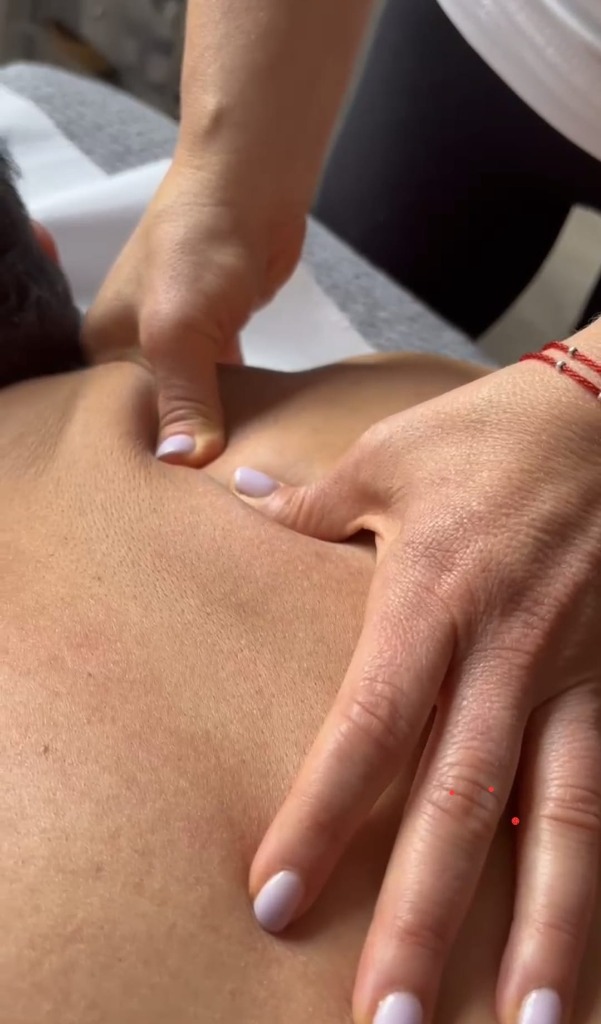
Deep tissue techniques apply sustained pressure to myofascial trigger points, increasing local blood flow and prompting the release of the sarcomere contraction that forms the taut band. Research in the Journal of Bodywork and Movement Therapies shows that ischaemic compression of trigger points reduces pain intensity by 30–50% in a single session.
2. Fascial Rehydration
The thoracolumbar fascia responds to sustained mechanical loading by releasing bound water molecules, a process called thixotropy. When your therapist works along the fascial planes of the lower back, the tissue transitions from a gel-like stiffness to a more fluid, mobile state — restoring the gliding between layers that prolonged sitting destroys.
3. Nervous System Down-Regulation
Massage activates the parasympathetic nervous system, reducing cortisol by up to 31% and increasing serotonin and dopamine production (Field et al., 2005). For centrally sensitised pain, this neurological reset is crucial — it breaks the cycle of protective guarding that perpetuates the pain.
4. Improved Proprioception & Motor Control
By restoring normal afferent input from the lumbar muscles, massage helps the brain re-map the area accurately. This improved proprioception allows the deep stabilisers to re-engage, reducing the compensatory patterns that caused the problem in the first place.
What to Expect in a Session
At Mayfair Massage & Therapy, a lower back pain session typically combines:
- Assessment — identifying the specific muscles involved, range-of-motion limitations and any referred pain patterns
- Deep tissue work on the erector spinae, quadratus lumborum and gluteal complex
- Myofascial release along the thoracolumbar fascia and iliotibial band
- Sports massage techniques for the hip flexors (psoas major, iliacus) which directly influence lumbar lordosis
- Cupping therapy when appropriate, to decompress fascial layers and accelerate recovery
How Often Should You Come?
For acute episodes, research supports twice-weekly sessions for 2–3 weeks, followed by weekly maintenance. For chronic lower back pain, a sustained programme of fortnightly sessions produces the most consistent long-term outcomes, preventing the cycle of flare-up and recovery that disrupts your work and training.
"Lower back pain is not a life sentence. With consistent, evidence-based manual therapy targeting the specific mechanisms driving your pain, measurable improvement is not just possible — it is expected."
— Concetta, Lead Therapist